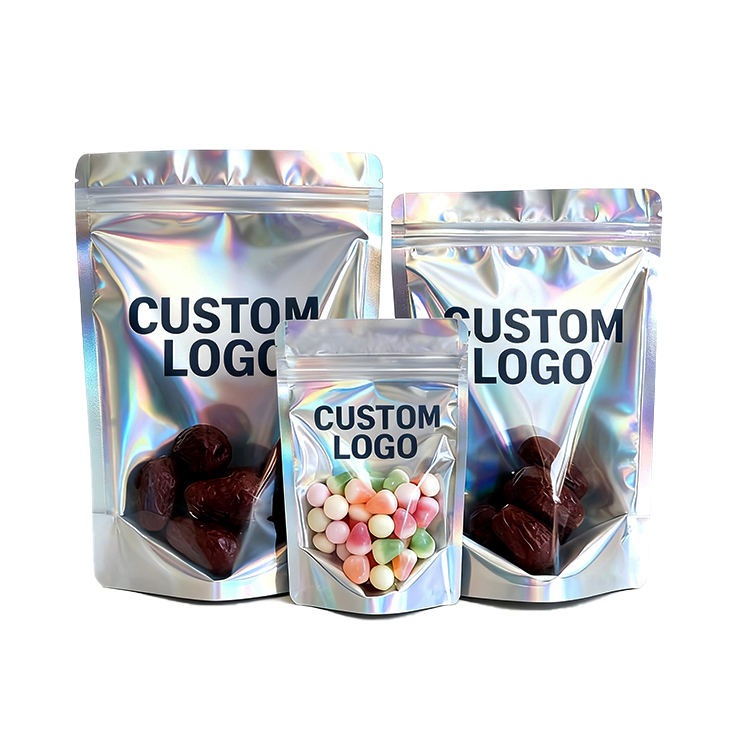
Pet food packaging plays a crucial role in protecting the product, enhancing brand identity, and ensuring consumer satisfaction. With the pet food market growing rapidly, choosing the right packaging is essential to meet both functional and aesthetic requirements. In this guide, we’ll explore various types of pet food packaging, their applications, advantages, disadvantages, and customization options. We’ll also discuss how to select the most suitable packaging for your pet food products.

Types of Pet Food Packaging
With a variety of pet food package options available—such as bags, boxes, blister packs, and tubes—brands have the flexibility to select solutions that align with their product type, target audience, and sustainability goals. Each packaging type offers unique benefits, from the lightweight convenience of bags to the sturdy protection of boxes, making it crucial to understand their distinct characteristics before making a decision.
Pet Food Packaging Bag with Zip Lock
Resealable zip lock bags are a highly versatile and practical choice for pet food packaging. These bags are typically made from lightweight yet durable materials such as PE (polyethylene) or PET (polyethylene terephthalate) , which provide excellent resistance to moisture, air, and contaminants while maintaining a sleek appearance. Additionally, some manufacturers have begun incorporating eco-friendly paper-based materials like kraft paper into their designs, offering an alternative that appeals to environmentally conscious consumers.
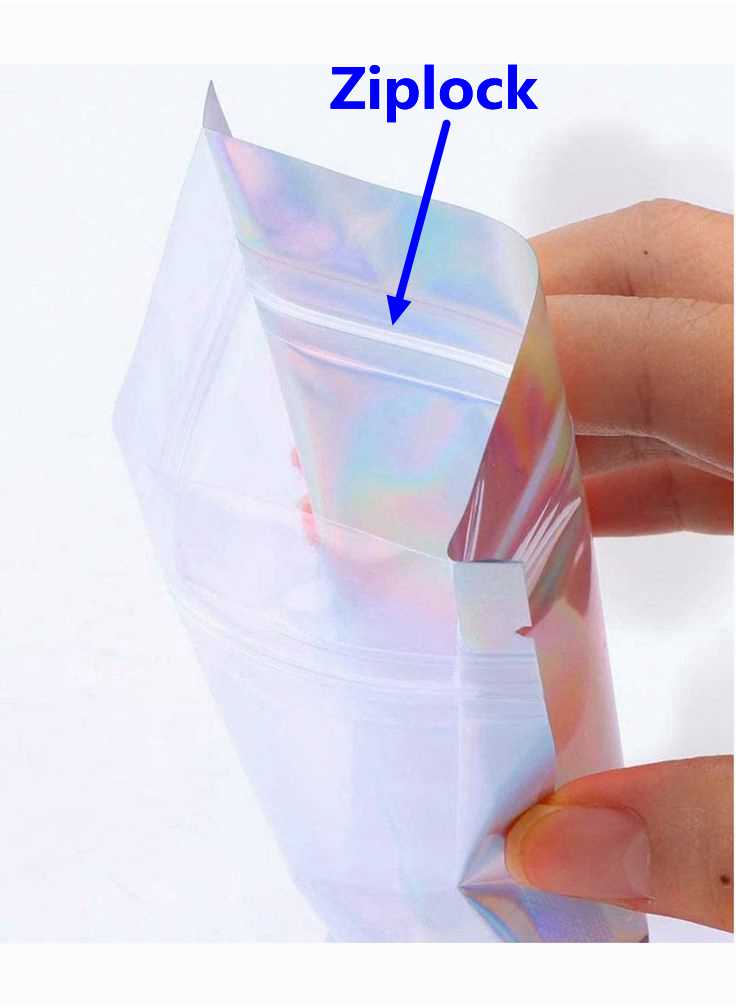

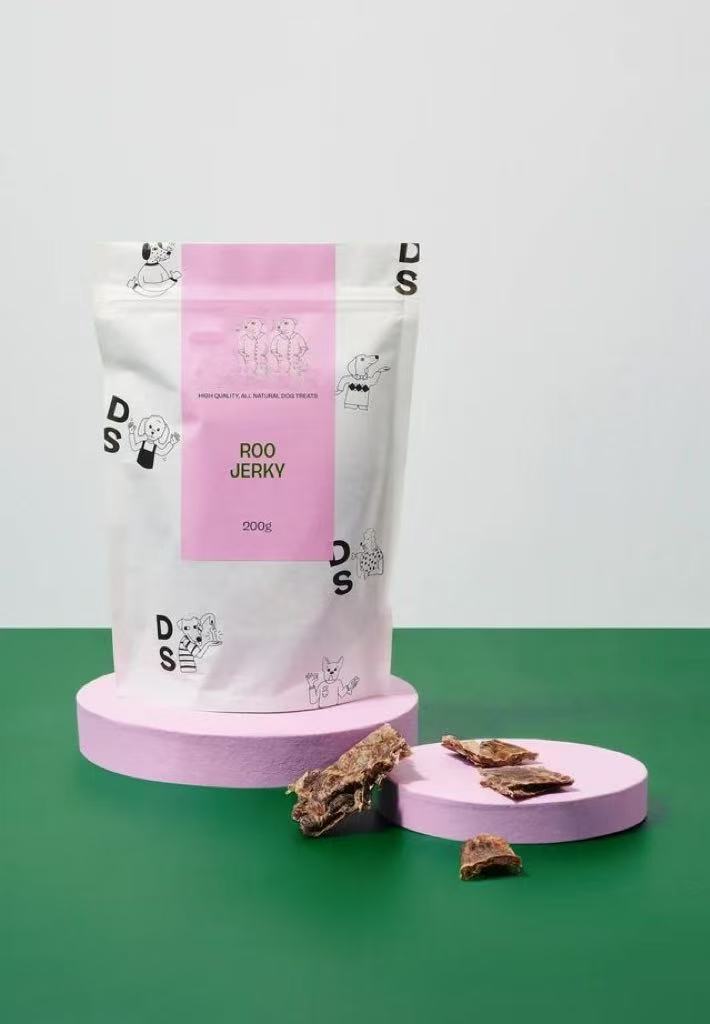
Resealable zip lock bags are ideal for a wide range of pet food products, including dry kibble, dog treats, cat snacks, and even homemade pet treats. Their ability to maintain freshness makes them especially popular in retail environments, where customers value convenience and functionality. For instance, brands offering dog treat packaging wholesale often rely on these bags to create an appealing and practical solution for bulk sales. Smaller businesses specializing in homemade dog treat packaging can also leverage customizable options to enhance their brand identity and connect with niche markets.
Minimum Order Quantity (MOQ): Typically ranges from 10,000 to 20,000 units, depending on the size and complexity of the design.

Advantages
- Cost-effective and lightweight.
- Provides a convenient resealable feature to maintain freshness.
- Easy to print with vibrant designs and nutritional information.
Disadvantages
- Limited Protection Against Physical Damage : While they excel at preserving freshness, these bags provide minimal protection against crushing or punctures. This makes them unsuitable for heavy or bulky items like wet pet food or raw meat products.
- Not Ideal for Liquids or Wet Foods : The flexible nature of PE and PET materials means these bags are not designed to hold liquids or semi-liquid products, which require more robust packaging solutions like vacuum-sealed pouches or plastic containers. Kraft paper, while eco-friendly, may also struggle with moisture resistance unless laminated with a protective layer.
Stand-Up Pouches for Pet Food
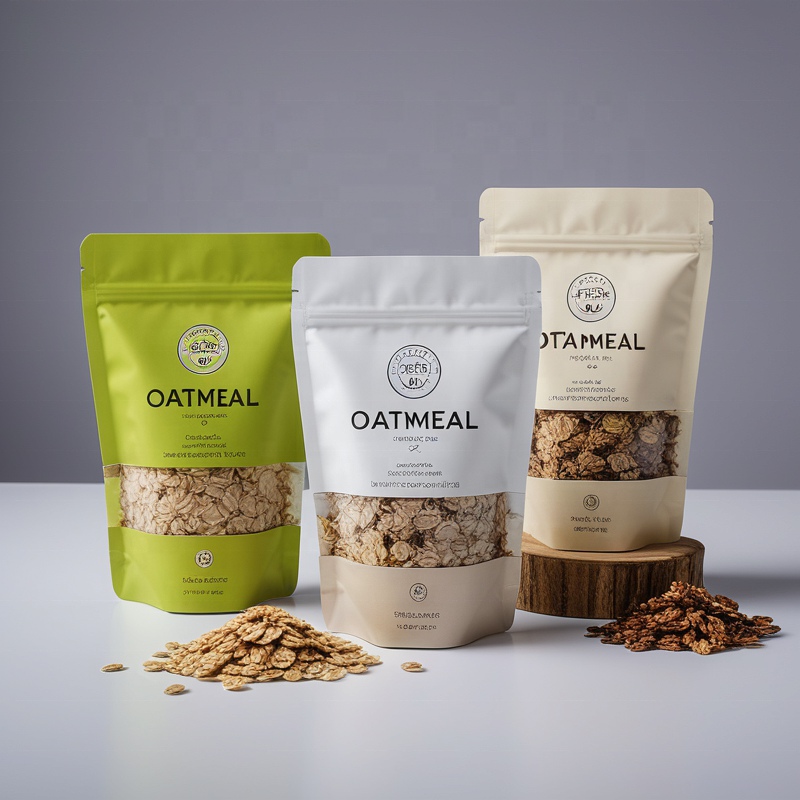
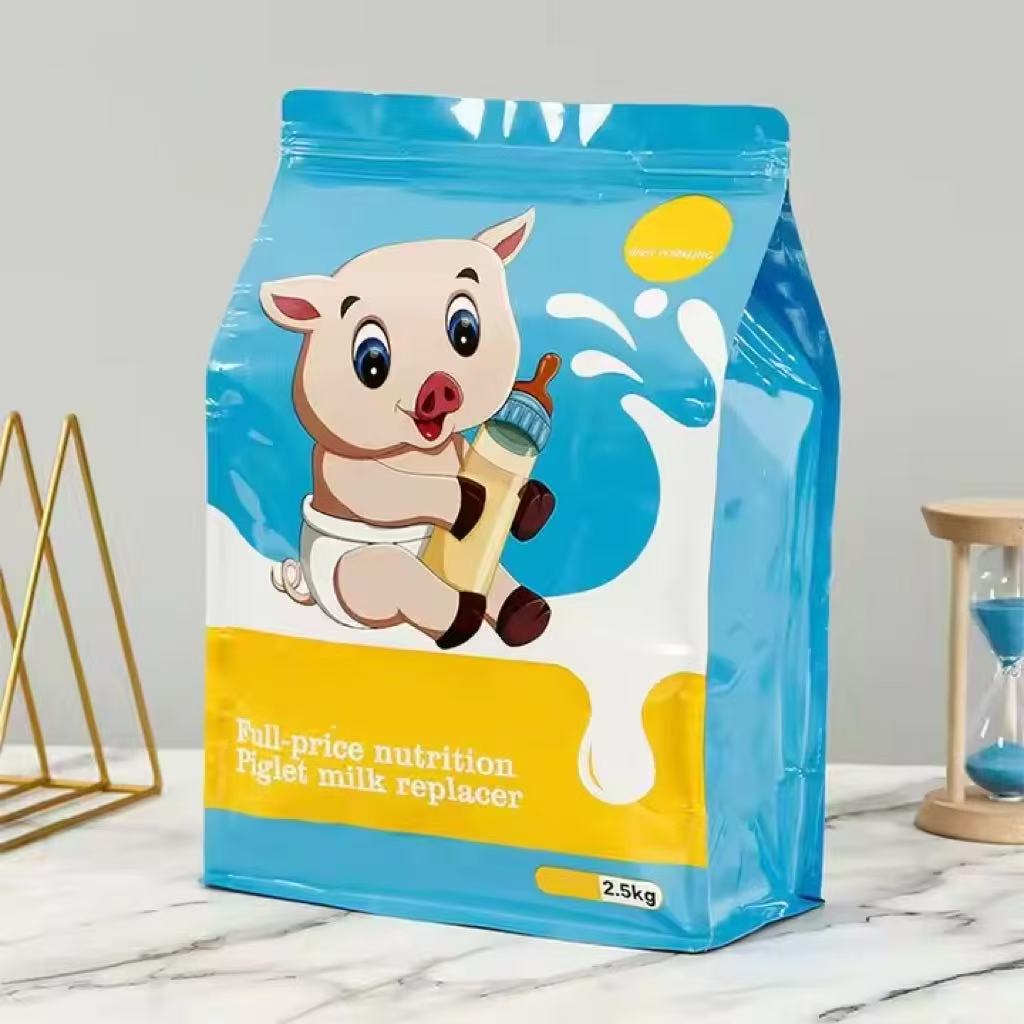
Stand-up pet food packaging pouches are flexible bags designed with a flat bottom gusset that allows them to stand upright on shelves or countertops. This feature not only enhances their functionality but also makes them an attractive option for retail displays. These pouches are typically made from laminated materials such as PET/PE (polyethylene terephthalate/polyethylene) or foil-lined composites, which provide excellent barrier properties against moisture, oxygen, and light . The combination of these materials ensures the freshness and shelf life of dry pet food, treats, and snacks, making them a popular choice for manufacturers and consumers alike.
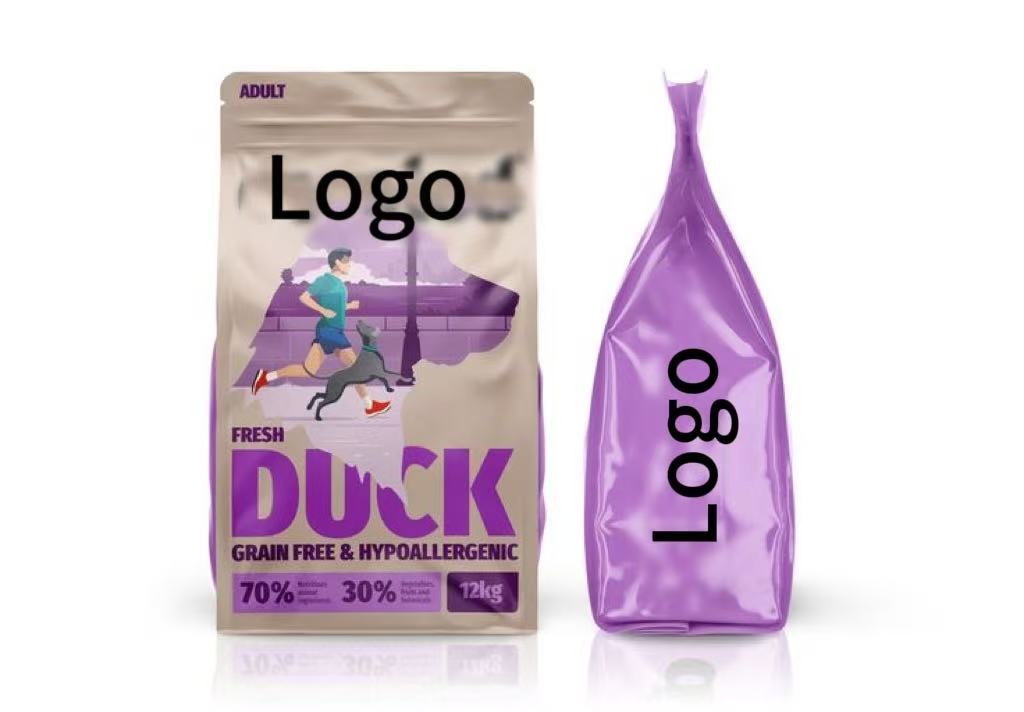
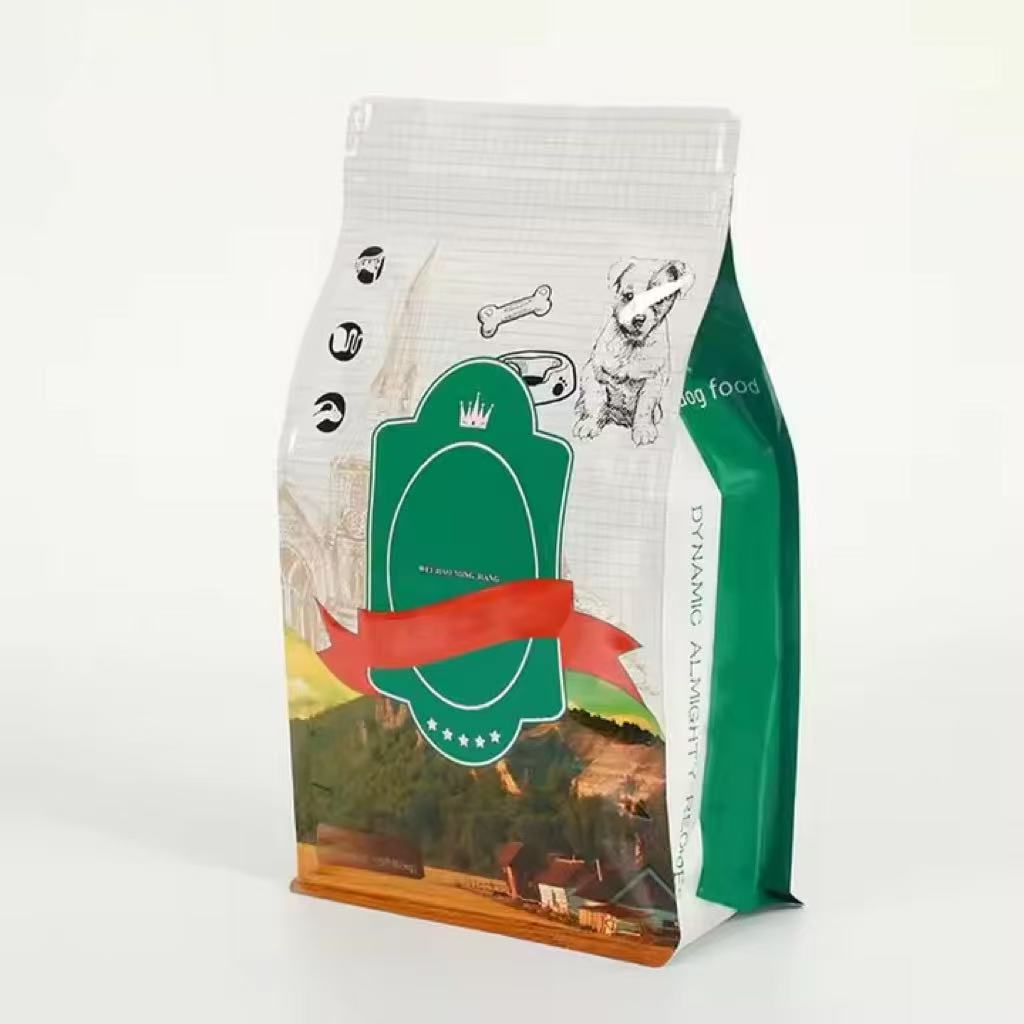

Stand-up pouches are highly versatile and are particularly well-suited for packaging dry pet food, dog treats, cat snacks, and even premium pet products like homemade dog treat packaging. Their ability to stand upright makes them ideal for retail environments where visibility and branding are crucial. Additionally, their sleek and modern design appeals to consumers looking for gift-worthy packaging, especially for products like dog snack packaging or cat treat packaging. Brands can use these pouches to create eye-catching displays that capture attention and drive sales.
MOQ: 20,000 units for customizations options.
Customization: Supports advanced printing techniques like CMYK, PMS colors. Some pouches can also include features like tear notches or resealable zippers.
| Advantages | Disadvantages |
| 1. Enhances visibility and shelf appeal. 2. Provides a premium look with customizable designs. 3. Space-efficient for storage and transportation. | 1. Less durable than rigid packaging. 2. Limited protection against heavy impacts. |
Pet Treats Aluminum Foil Bags
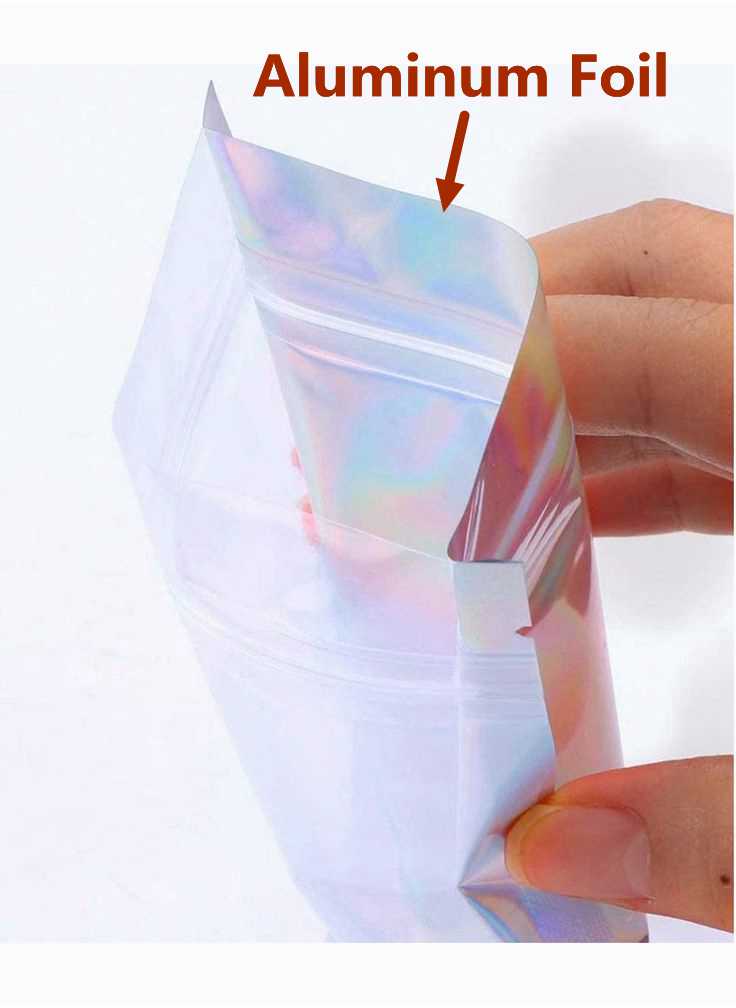
Aluminum foil bags are renowned for their exceptional barrier properties, making them an ideal choice for packaging sensitive products that require protection against external elements. These bags effectively block oxygen, moisture, and light, ensuring the quality and freshness of the contents remain intact over extended periods . The impermeable nature of aluminum foil prevents the migration of gases, volatile aromas, and other contaminants, which is crucial for maintaining the integrity of delicate items such as dry pet food, raw dog food, or premium treats.
Customization: Supports advanced printing techniques and eco-friendly materials.
MOQ: 20,000 units
Applications
1.Dry pet food often contains ingredients like grains, proteins, and fats that can degrade when exposed to oxygen or moisture. Aluminum foil bags provide a robust barrier against these elements, preserving the nutritional value and flavor of the food while extending its shelf life . This makes them particularly suitable for high-quality dry pet food brands that prioritize product longevity and consumer satisfaction.
2.Raw dog food is highly perishable and requires stringent protection to maintain its freshness and safety. Aluminum foil bags offer superior moisture and oxygen barrier properties, preventing spoilage and bacterial growth. Their ability to shield contents from UV rays also helps preserve the natural nutrients and appearance of raw dog food, making them a preferred choice for manufacturers in this niche market.
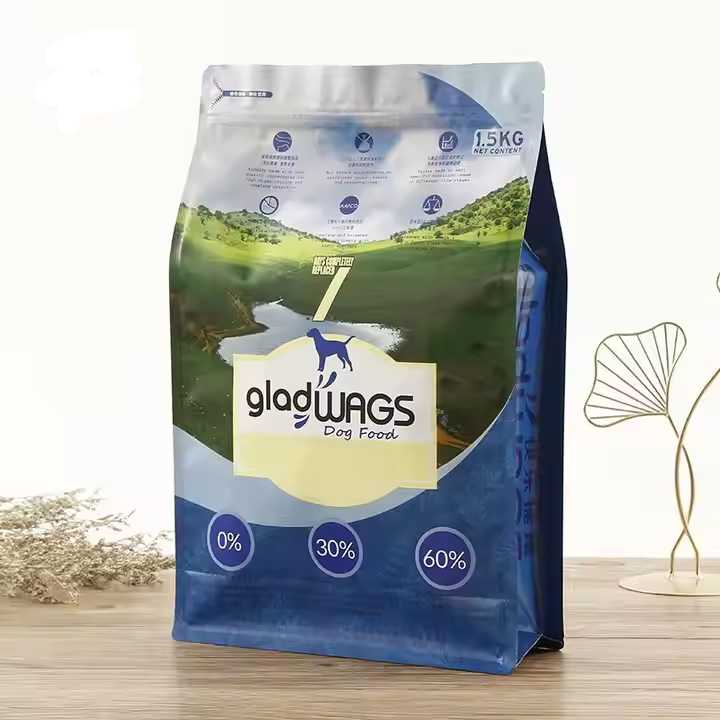
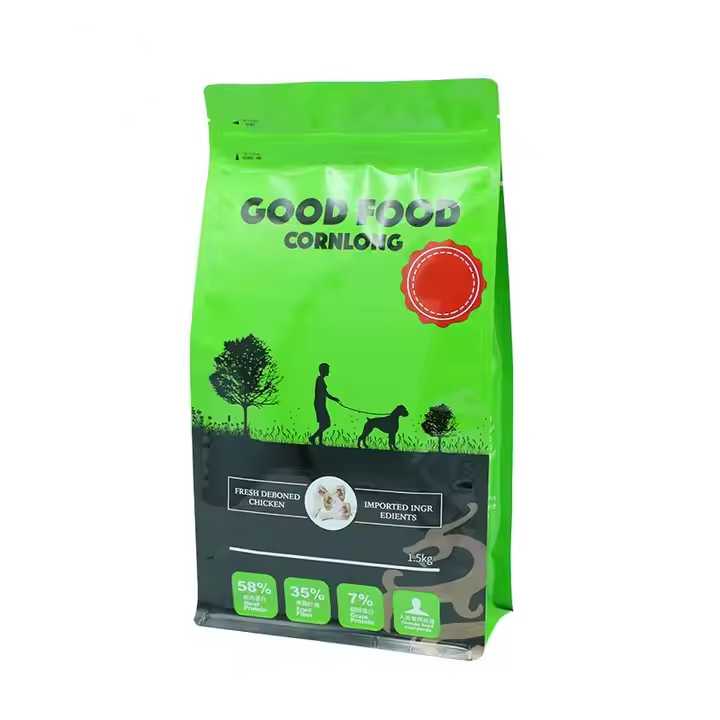
3.Premium pet treats, especially those made with natural or organic ingredients, benefit greatly from the protective qualities of aluminum foil bags. These bags not only safeguard the treats from environmental factors but also enhance their visual appeal on retail shelves. The sleek, reflective surface of aluminum foil adds a luxurious touch, appealing to consumers who seek both quality and aesthetics in pet care products.
| Advantages | Disadvantages |
| 1. Excellent barrier protection. 2. Lightweight and flexible. 3. Good moisture-proof performance and light protection | 1. More expensive than basic materials. 2. Limited recyclability unless made from eco-friendly composites. |
Paper Boxes and Corrugated Cardboard Boxes
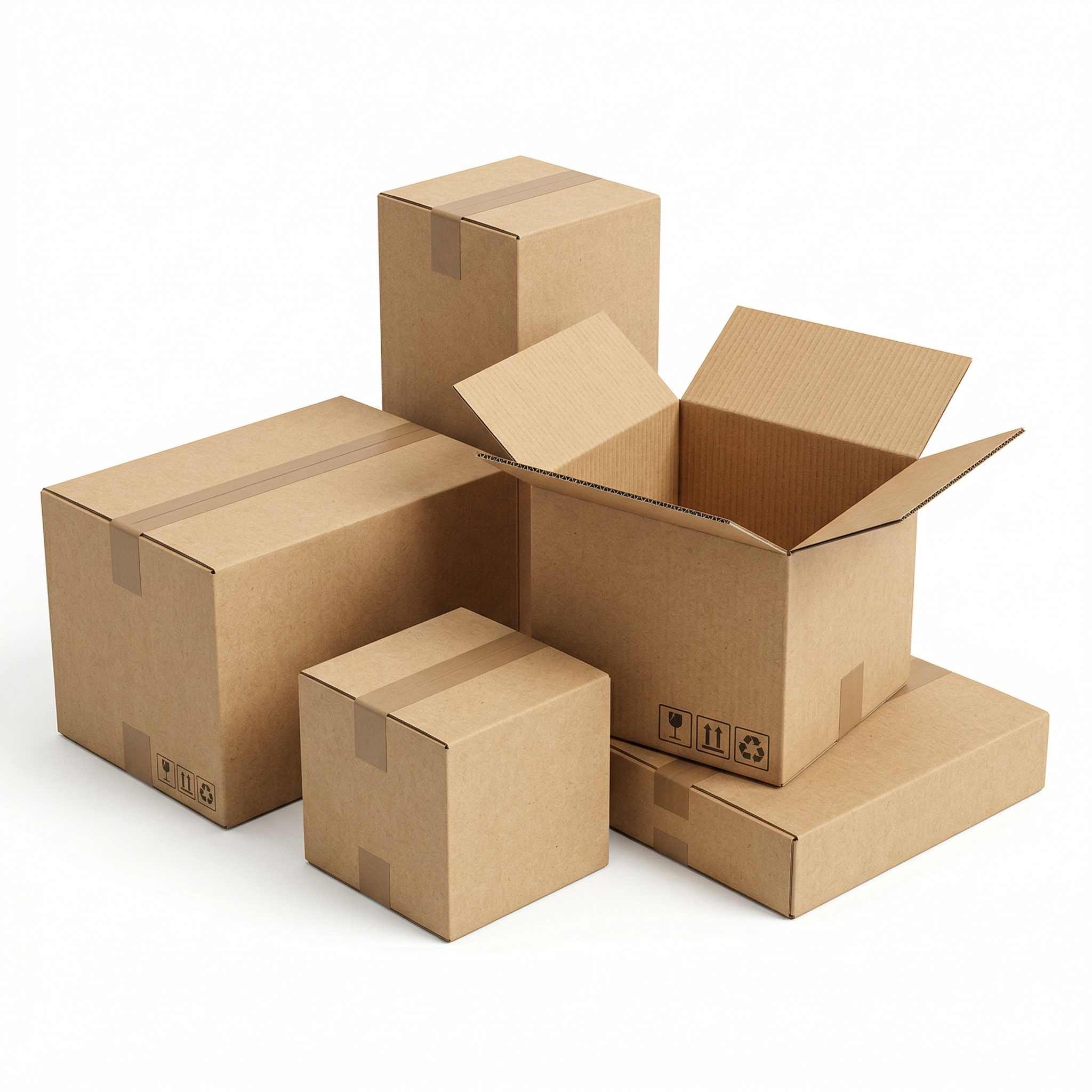
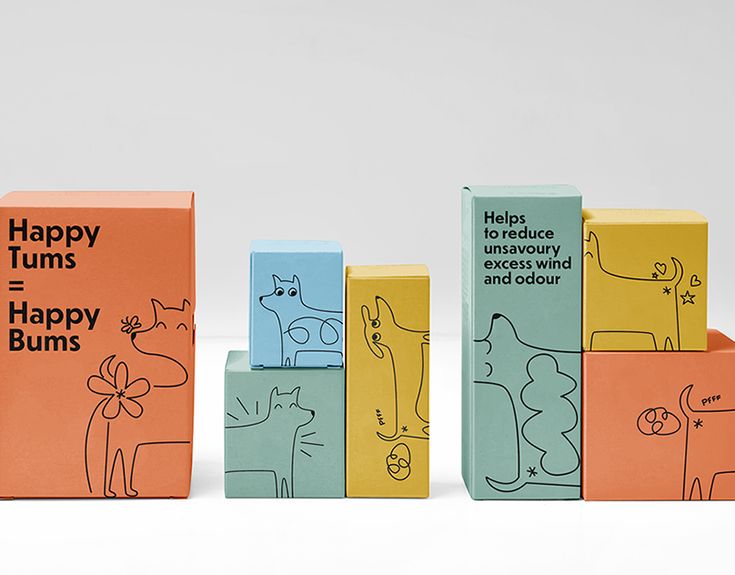
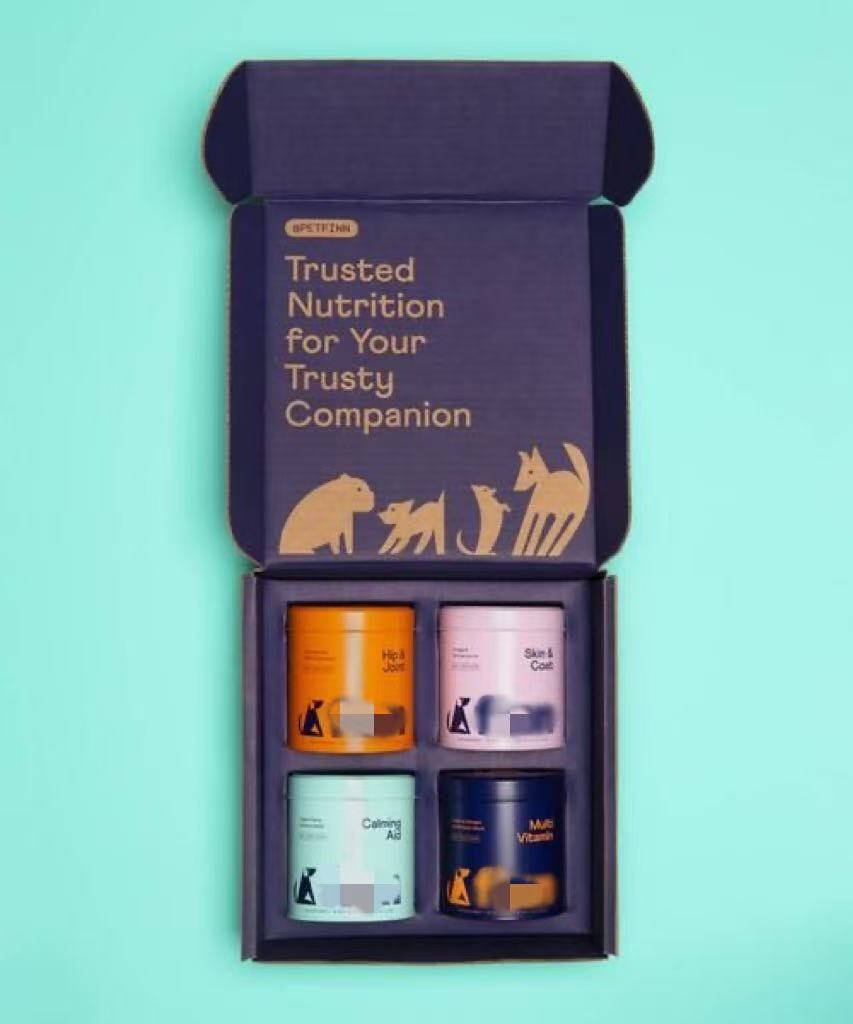
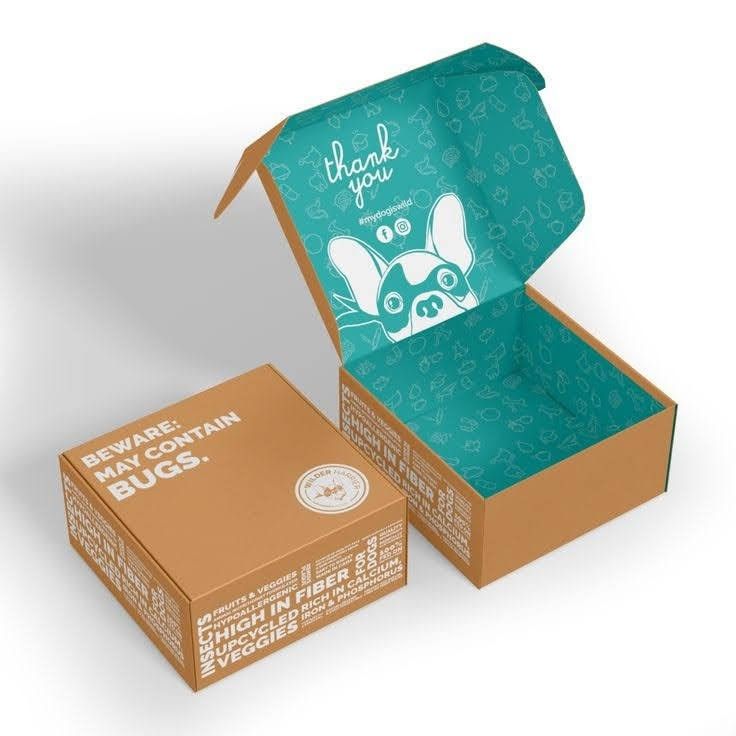
Paper pet food packaging boxes are rigid and sturdy, often made from cardboard or corrugated materials. They can be designed in various shapes and sizes, making them suitable for a wide range of applications . Their sturdy construction ensures excellent protection against physical damage, such as crushing or impacts, which is crucial for preserving the integrity of premium pet food products.
MOQ: Starts at 3,000 units for standard designs
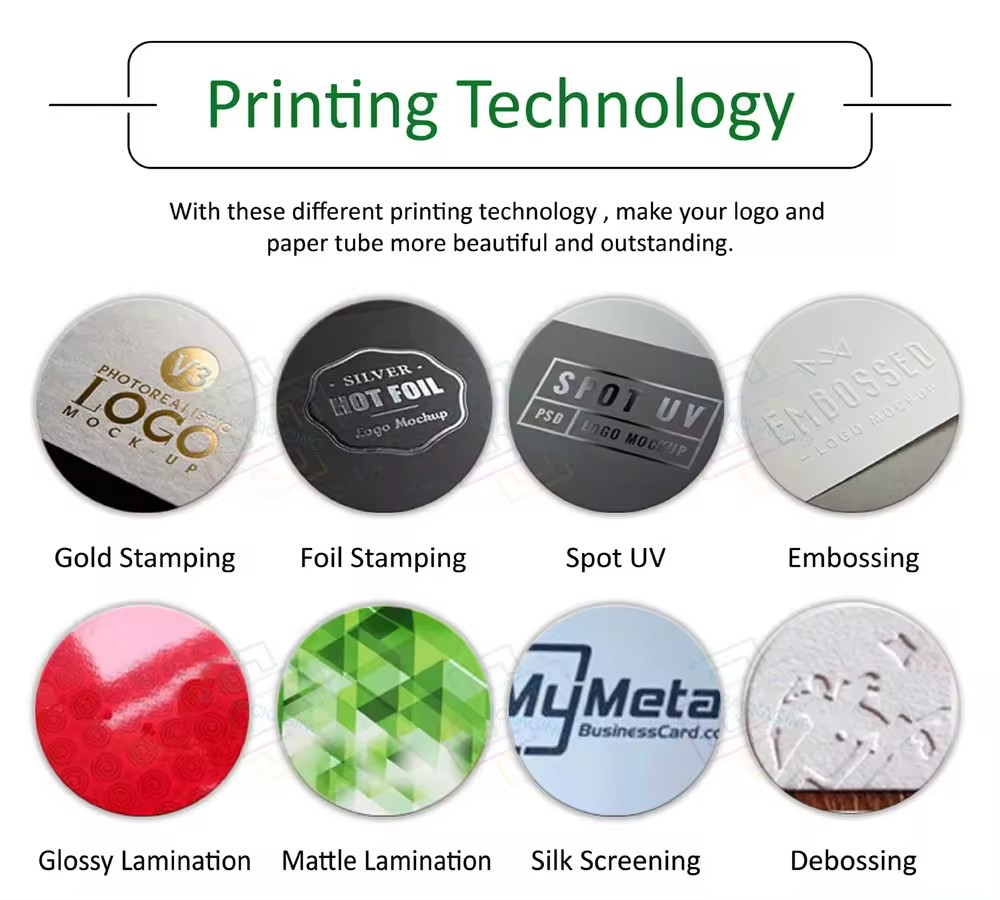
Customization: Supports advanced techniques like foil stamping, spot UV, and embossing. Brands can also incorporate eco-friendly materials for sustainability.
Applications
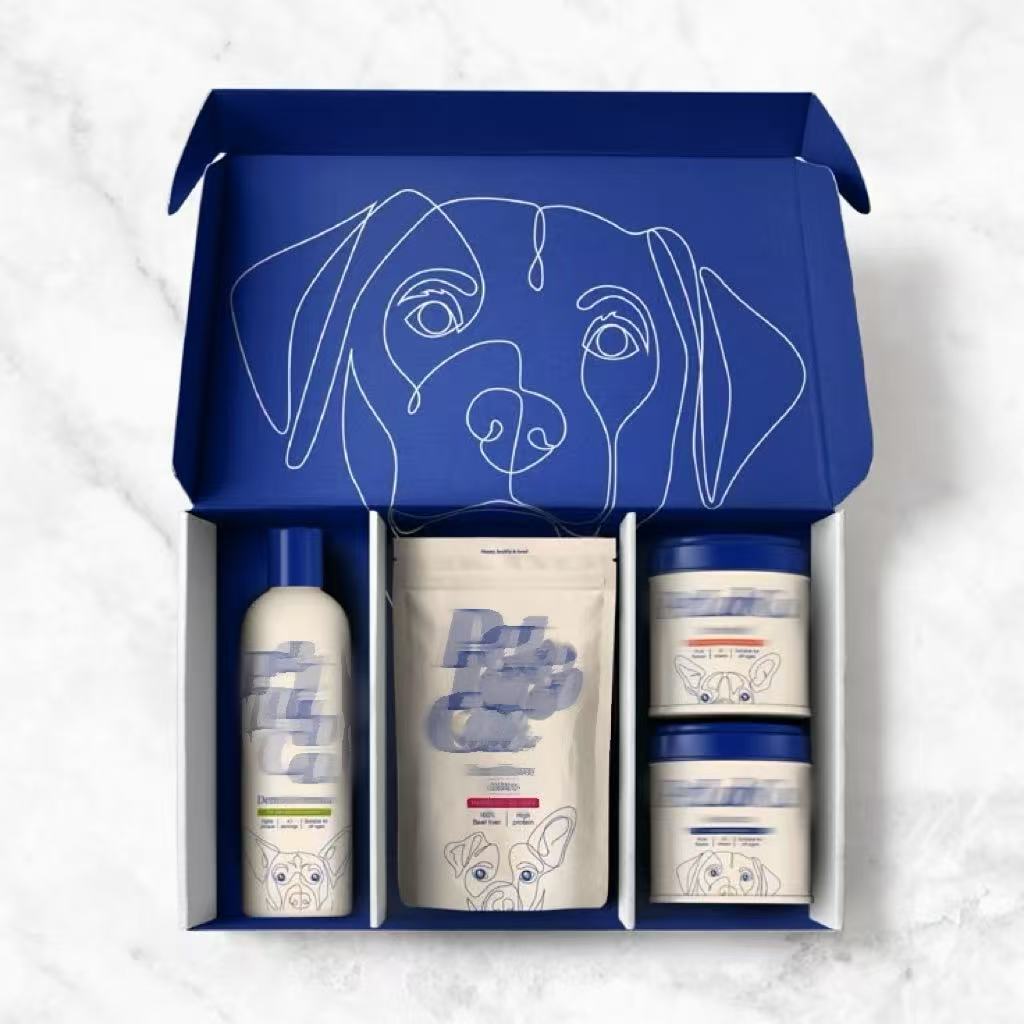
Paper boxes are particularly well-suited for premium pet food, sampler packs, or gift sets, where presentation and protection are equally important. Corrugated boxes, a subtype of paper boxes, excel in shipping and wholesale packaging due to their robust structure and lightweight nature . They are ideal for transporting bulk quantities of pet food while minimizing the risk of damage during transit. For retail environments, rigid paper boxes offer an elegant solution for high-end pet food brands looking to create a memorable unboxing experience. Additionally, these pet food packaging boxes can be designed with compartments or inserts to securely hold smaller items like treats or supplements, making them perfect for gifting or promotional bundles.
| Advantages | Disadvantages |
| 1. Excellent protection against impacts and crushing. 2. Highly customizable with printing, embossing, and die-cutting. 3. Eco-friendly options are available, such as recycled cardboard. | 1. Heavier and more expensive than flexible packaging. 2. Less space-efficient for storage. |
Vacuum-Sealed Packaging for Wet Pet Food
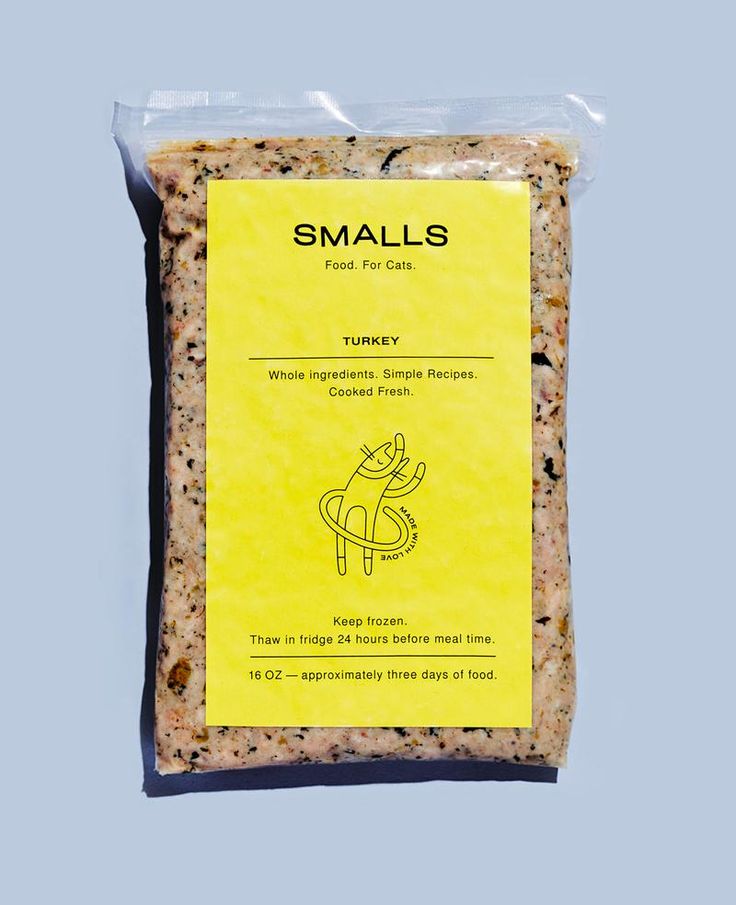
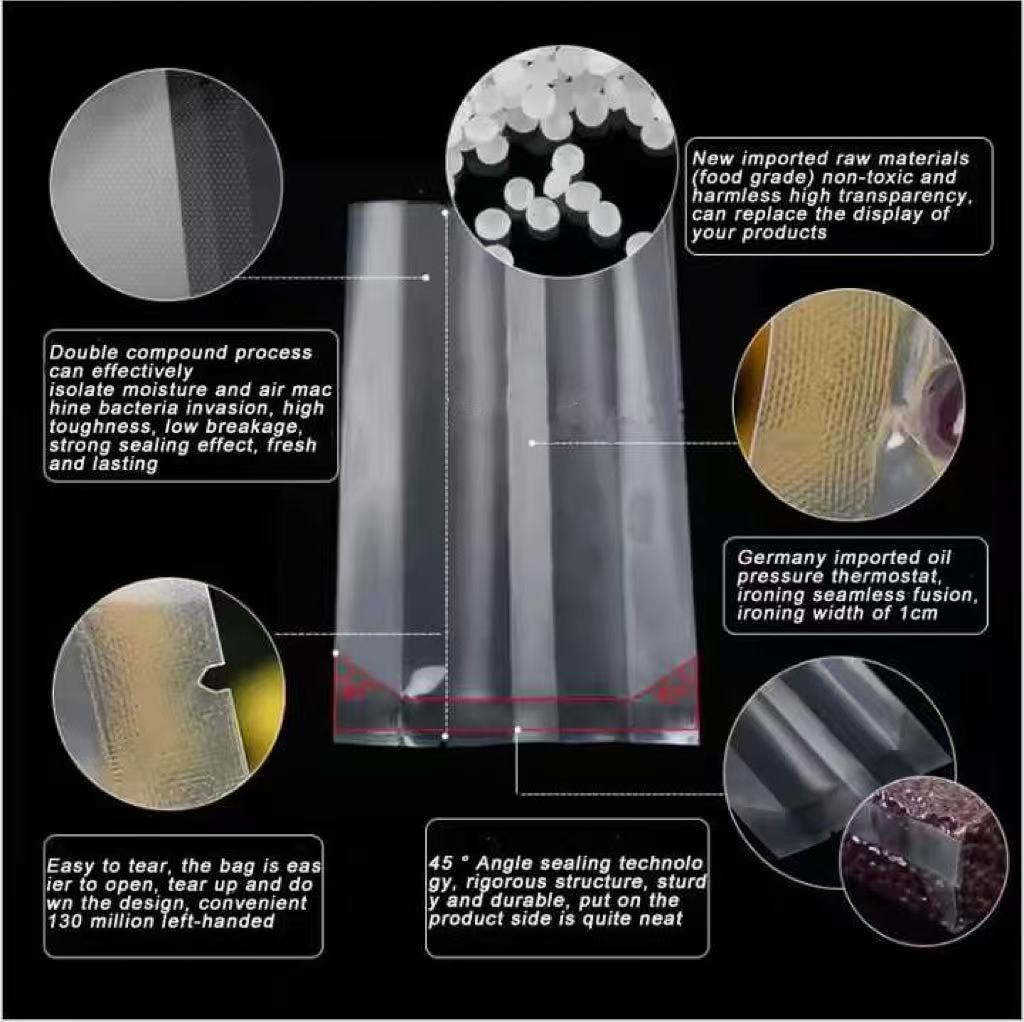
Vacuum-sealed packaging removes air from the container, extending the shelf life of the product. It is often used for wet pet food or sensitive dry products.
Applications: Perfect for wet pet food, raw dog food, or sensitive treats that require extended freshness.
Customization: Supports printing and branding, but the focus is on functionality rather than aesthetics.
MOQ: Typically requires a high volume, often starting at 20,000 units.

Advantages:
- Preserves product freshness by removing oxygen.
- Protects against spoilage and contamination.
- Ideal for high-value or perishable products.
Disadvantages:
- More expensive due to specialized equipment and materials.
- Limited reusability after opening.
Custom Plastic Jars for Pet Snacks
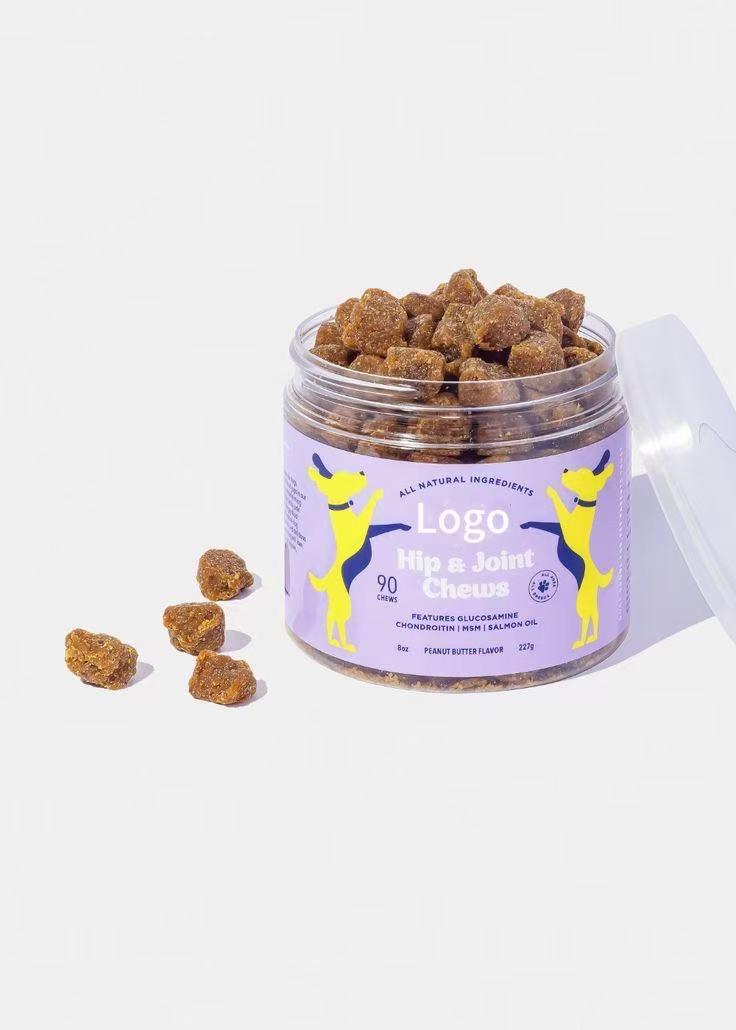
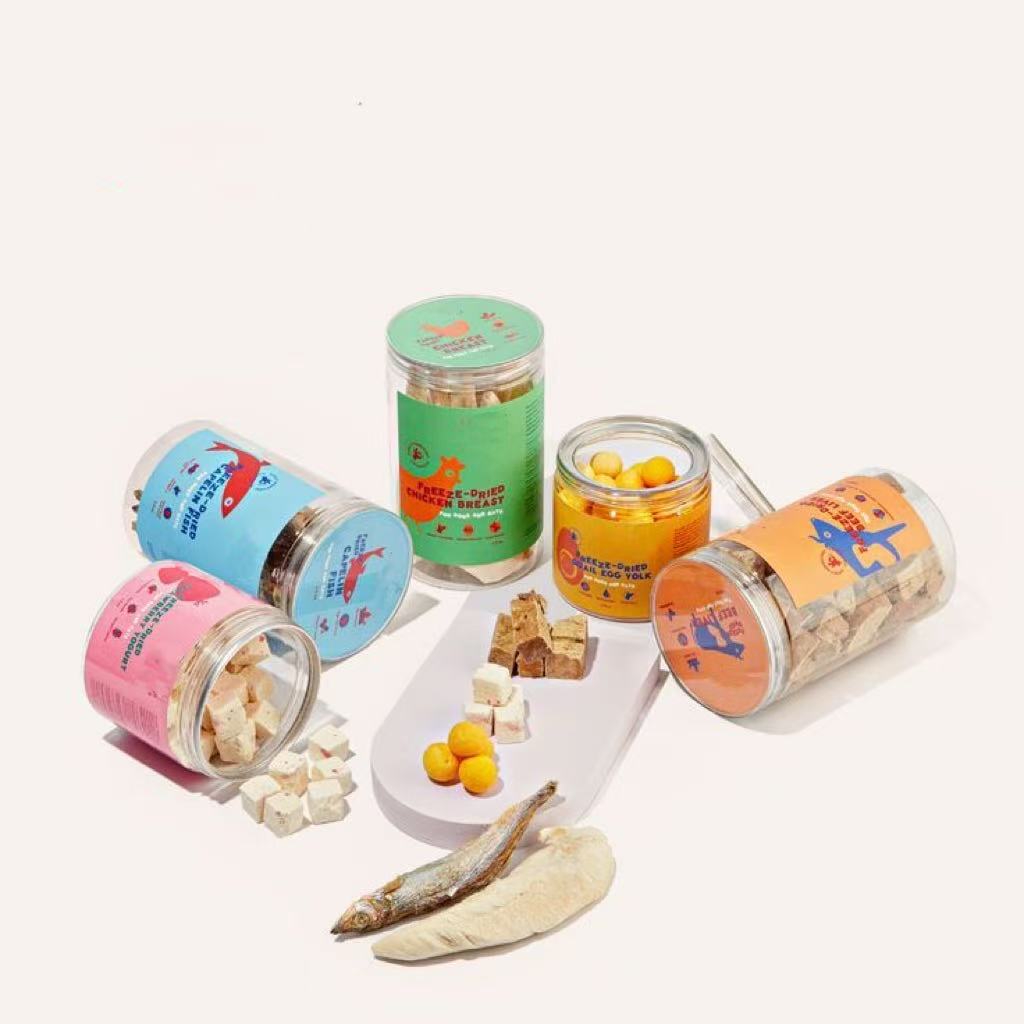
Rigid plastic jars are a popular choice for packaging wet pet food, raw dog food, or bulk dry food due to their durability and reusability. These containers are designed to withstand repeated use while maintaining their structural integrity, making them ideal for long-term storage. Many rigid plastic containers come with features like moisture-proof mats, which help preserve the freshness of the contents by reducing exposure to humidity. This is particularly beneficial for wet pet food, which requires airtight conditions to prevent spoilage. Their sturdy construction also makes them resistant to cracks, leaks, or spills, ensuring that both wet and dry pet food remain in optimal condition during storage or transportation.
MOQ: 3,000 units
Customization: Size, Moisture-proof mat ( Gasket or Aluminum-foil), with printed label
Advantages:
- Provides excellent protection against moisture and impacts.
- Reusable and stackable for storage.
- Easy to open and close.
Disadvantages:
- Heavier and more expensive than flexible packaging.
- Large shipping spaces and high shipping cost.
Pet Food Packaging Paper Tubes
Paper tubes are cylindrical containers that have gained popularity for packaging dry pet food, dog treats, or snacks. These containers are lightweight, compact, and often made from recyclable materials, making them an eco-friendly alternative to traditional packaging options. Their cylindrical shape not only adds a distinctive visual appeal but also provides efficient storage and stacking capabilities. Paper tubes are particularly suitable for products like dry kibble or bite-sized treats, as they protect the contents from moisture and light exposure. While their barrier properties may not match those of aluminum foil or plastic, paper tubes are often lined with protective coatings to enhance durability and freshness, ensuring the product remains in optimal condition during transit and storage.
MOQ: 3,000 units.
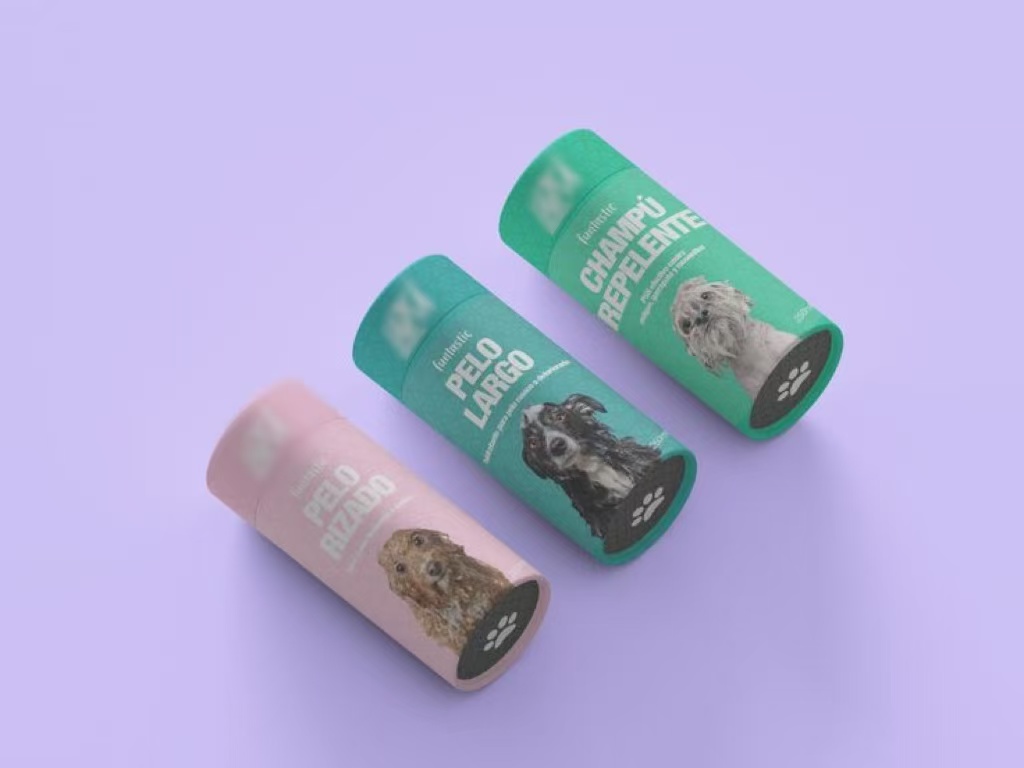
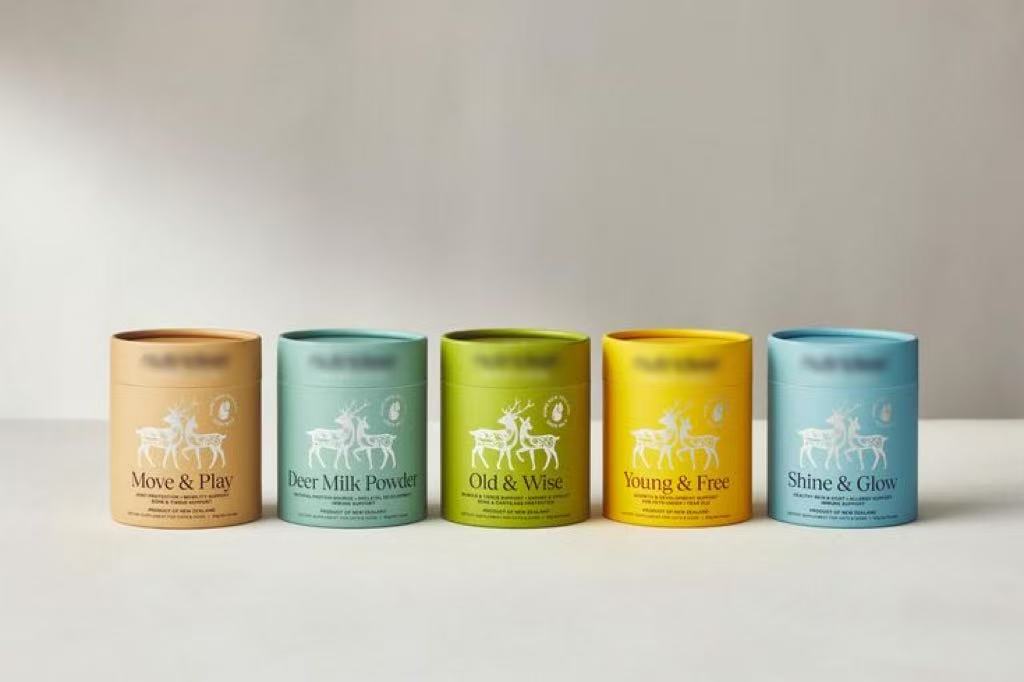
While paper tubes support printing and branding, their customization options are somewhat limited compared to flat surfaces like boxes or bags. However, brands can still incorporate eye-catching designs, logos, and vibrant colors to enhance shelf appeal. Techniques such as direct printing or label application allow for clear communication of product details and brand identity. Despite these limitations, paper tubes offer a unique canvas that stands out in a market saturated with rectangular packaging. Some manufacturers also provide options to include caps or lids, adding functionality and reusability. By focusing on creativity within these constraints, brands can leverage paper tubes to deliver a memorable unboxing experience while promoting sustainable practices.
| Advantages | Disadvantages |
| 1. The highest ability to withstand pressure. 2. Eco-friendly options are available, such as recycled paper. 3. Easy to stack and store. | 1. Large storage volumes and transportation fees. 2. Not suitable for wet or liquid pet food |
Eco-Friendly and Sustainable PET Food Packaging
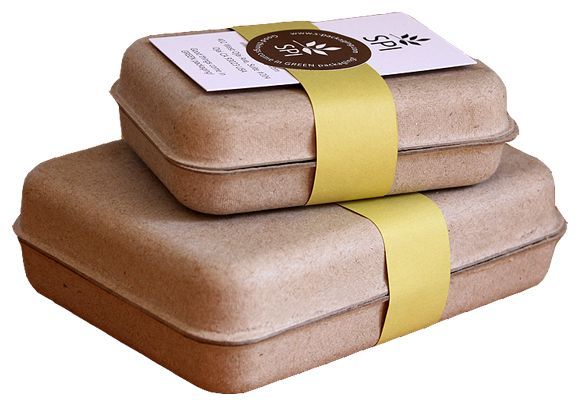
Eco-friendly pet food packaging incorporates materials like biodegradable plastics, recycled paper, or compostable options, which are designed to minimize environmental impact. These materials break down naturally or can be recycled, reducing waste and promoting sustainability. For pet food brands, this aligns with the growing consumer demand for greener solutions.
Customization: Shape and size
MOQ: 10,000 units .

Applications
Such packaging is ideal for all pet food types, from dry kibble to wet food pouches, especially for brands prioritizing sustainability . It appeals to eco-conscious consumers and supports brand loyalty by showcasing a commitment to reducing carbon footprints while maintaining product freshness and safety.
| Advantages | Disadvantages |
| 1. Aligns with consumer demand for environmentally friendly products. 2. Supports brand identity as a responsible company. 3. Often recyclable or compostable. | 1. May be more expensive than traditional materials. 2. Limited availability of certain eco-friendly materials. |
How to Choose the Right Pet Food Packaging?
Selecting the right pet food packaging depends on several factors:
1. Product Type:
Dry Pet Food: Stand-up pouches, paper boxes, or composite soft packaging are ideal.
Wet Pet Food: Vacuum-sealed packaging, plastic buckets, or cans are preferred.
Treats: Resealable bags, paper tubes, or eco-friendly options work well.
2. Brand Identity: Luxury brands may opt for rigid boxes or premium materials like aluminum foil. And the eco-conscious brands should focus on recyclable or biodegradable materials.
3. Customization Needs: The size of all pet food package can be customizrd. Advanced printing, embossing, or foil stamping can enhance branding. Consider eco-friendly options to appeal to sustainability-minded consumers.

4. Cost and MOQ: Evaluate the minimum order quantities and production costs to align with your budget.
5. Sustainability Goals: Incorporate recyclable or compostable materials to reduce environmental impact. Highlight eco-friendly features on the packaging to appeal to environmentally conscious buyers.
Pet food packaging is more than just a container—it’s a critical component of your brand’s identity and product protection. By understanding the various types of pet food packaging, their applications, and customization options, you can choose the right solution for your pet food products. Whether you’re packaging dry kibble, wet food, or treats, there’s a packaging option that aligns with your brand’s values and consumer needs. As the pet food industry continues to evolve, focusing on sustainability and innovation will be key to staying competitive and meeting consumer expectations. By investing in high-quality, eco-friendly packaging, you can not only protect your product but also enhance your brand’s reputation in the market.